A buyer may approve a crisp freeze-dried strawberry sample, but later find that the product becomes softer after repacking, warehouse storage or shipment. This does not automatically mean the freeze-drying process failed.
When freeze-dried fruit loses crispness, the investigation should separate several possible causes: residual moisture in the product, water activity, moisture absorbed after production, packaging barrier performance, sealing integrity, and storage or repacking conditions.
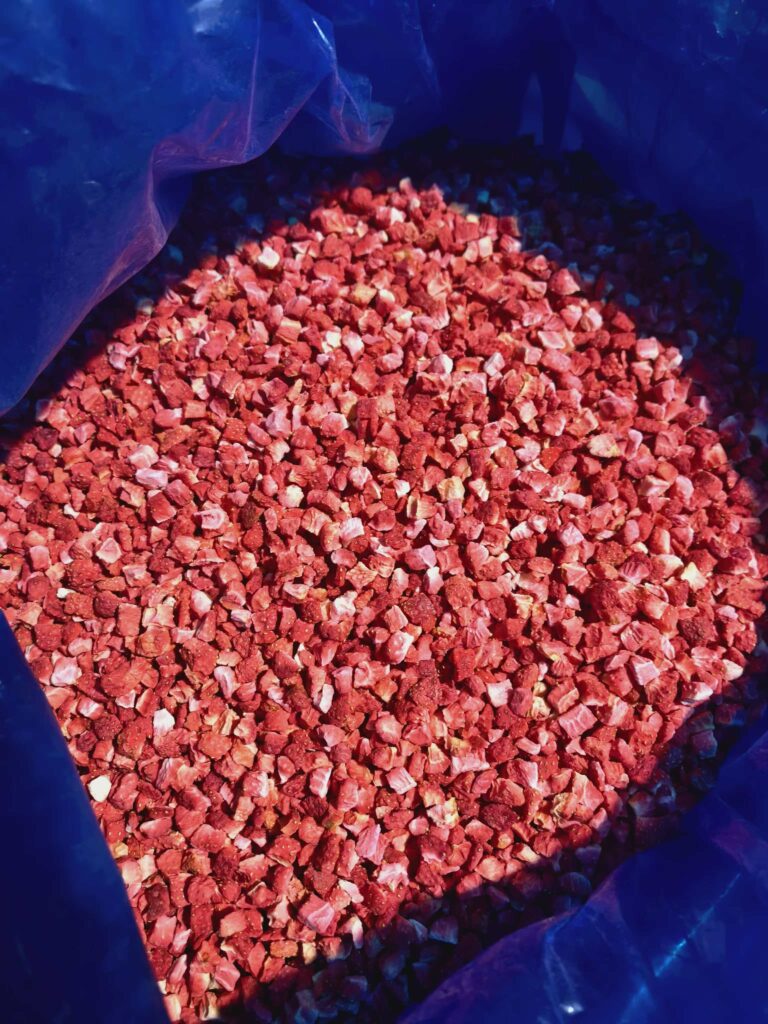
Why Freeze-Dried Fruit Loses Its Crisp Texture
Freeze-dried fruit has a porous structure. That structure helps create the light, crisp texture buyers expect, but it also means the fruit can readily absorb moisture from surrounding air.
The usual sequence is simple: dry product is exposed to humidity, moisture enters the porous structure, the texture changes, and the fruit becomes less crisp. The speed and severity depend on the fruit, format, packaging, seal condition, storage environment and downstream handling.
Moisture Content and Water Activity Are Not the Same Thing
Moisture content and water activity are related, but commercial buyers should not treat them as interchangeable specifications.
Moisture content describes how much water remains in the product. It is usually reviewed as part of the product specification and may also appear on a production-lot COA when tested for that shipment.
Water activity (Aw) describes how available that water is within the food system. This can matter for texture, product stability and shelf-life planning, depending on the fruit, product form and application.
A low moisture result does not automatically answer every question about texture behavior. Likewise, water activity should not be guessed from product appearance. If exact product-specific values are not verified from current company documents, buyers should request the applicable specification sheet and COA instead of relying on made-up limits.
Five Reasons a Shipment Can Become Soft
1. Residual moisture is higher than expected
If the product is already softer than expected before shipment, compare the approved specification with the production-lot COA. The buyer should check whether moisture, and water activity where specified or tested, match the agreed product requirements.
2. Product absorbs moisture during handling
Freeze-dried fruit can absorb moisture during inspection, repacking, filling, weighing or production-line waiting time. Even short exposure can matter when the room is humid or when small pieces and powders have a large exposed surface area.
3. Packaging has insufficient moisture-barrier performance
Package appearance alone is not enough. A metallic-looking pouch does not automatically prove adequate moisture protection. Commercial buyers should understand the packaging structure and whether it is suitable for the selected fruit, product form, route, shelf-life target and storage conditions.
4. Seal integrity is compromised
Moisture can enter through incomplete heat seals, contamination in the sealing area, pinholes, damaged inner bags or repeated opening during repacking. Seal quality matters for both bulk inner bags and finished retail pouches.
5. Storage or repacking environment is too humid
A product can leave the factory in acceptable condition but deteriorate after downstream handling. High warehouse humidity, long open-bag time, slow filling, poor resealing or unsuitable finished-product storage can all reduce crispness after arrival.
How a Buyer Should Investigate a Soft Product Complaint
When a shipment becomes soft, start with a structured review instead of assuming a single cause. The table below gives purchasing managers, importers, repackers and private-label teams a practical diagnostic route.
| Check | What to Review | Why It Matters |
|---|---|---|
| Approved sample | Texture, appearance, piece size and packaging used during sample approval. | Creates the reference point for comparing later production or shipment condition. |
| Product specification | Moisture, water activity where relevant, piece size, broken ratio, storage conditions and packing requirements. | Shows what was actually agreed before production. |
| Production COA | Lot-specific results available for the shipment, including moisture and other tested parameters. | Helps compare the shipped batch against the approved specification. |
| Moisture result | Whether the tested result is consistent with the specification for that product and format. | Higher-than-expected residual moisture can directly affect crispness. |
| Water activity if specified/tested | Aw result on the specification or COA where applicable. | Helps evaluate product stability and moisture behavior beyond appearance alone. |
| Packaging structure | Inner bag or pouch material, barrier layer, closure route and suitability for freeze-dried fruit. | Packaging appearance does not prove moisture-barrier performance. |
| Inner-bag condition | Damage, punctures, loose closures, crushed cartons or signs of poor handling. | Damaged bulk packaging can allow moisture pickup before repacking. |
| Seal integrity | Heat-seal completeness, contamination in seal area, pinholes and repeated opening. | Small seal failures can let humid air enter the package. |
| Warehouse conditions | Temperature, relative humidity and whether cartons were stored away from moisture exposure. | Storage conditions can change product texture after arrival. |
| Repacking conditions | Room humidity, filling speed, weighing process and whether fruit waited uncovered on the line. | Exposure during repacking is a common downstream cause of softness. |
| Time between opening and resealing | How long bulk bags or retail pouches stayed open before final sealing. | The longer the exposure, the greater the moisture pickup risk. |
What to Specify Before Buying Freeze-Dried Fruit in Bulk
A clear RFQ reduces later disputes. Buyers do not need to invent technical values, but they should ask which specification applies to the exact product, format and packaging route.
| Specification Item | Question to Ask the Supplier |
|---|---|
| Product form | Is the product supplied as whole fruit, slices, dices, pieces, granules or powder? |
| Piece size | What size range applies to the selected format, and how is it measured? |
| Moisture specification | What moisture requirement applies to this fruit and format? |
| Water activity where relevant | Is water activity specified or tested for this product or shipment? |
| Broken-piece tolerance | What broken ratio or fines level is acceptable for the intended application? |
| Microbiological specification | Which microbiological parameters are included in the applicable specification? |
| Ingredient declaration | What ingredient declaration applies to the product and recipe? |
| Packaging format | Is the order for bulk packing, retail pouch packing or another format? |
| Inner packaging | What inner bag material, net weight and sealing method are used for bulk packing? |
| Carton configuration | How many inner bags or retail units are packed per master carton? |
| Storage requirements | What storage conditions are recommended before use or repacking? |
| Shelf life | What shelf-life information applies to the selected product and packaging? |
| COA availability | Can a COA or batch document be provided for the shipment? |
| Sample approval process | Which sample will be used as the approval reference before bulk production? |
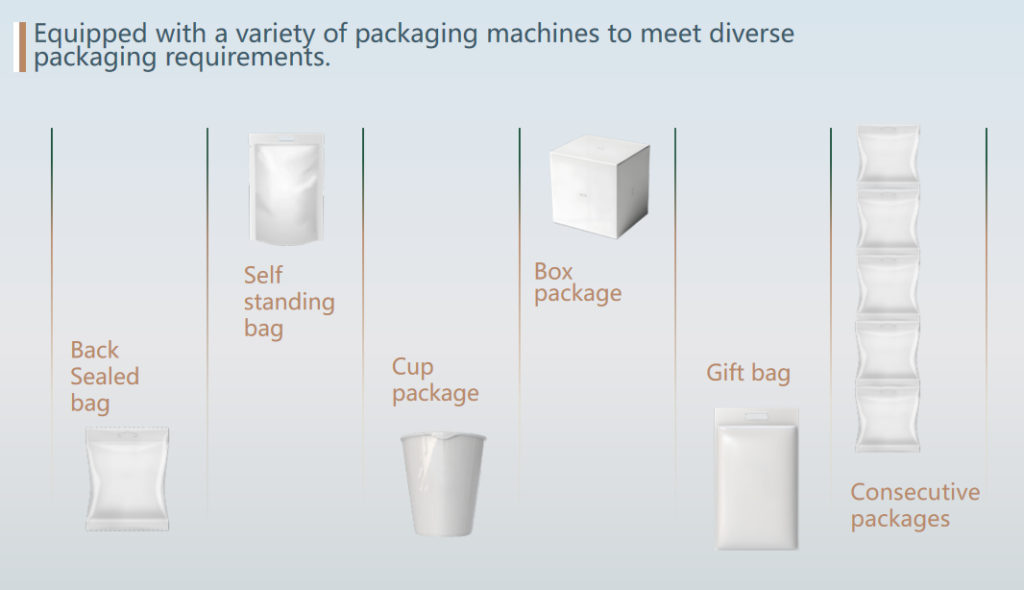
Bulk Packaging vs Retail Repacking
Bulk packaging and retail repacking are different control points. A bulk shipment may arrive in properly sealed moisture-barrier packaging. Once an importer, distributor or private-label company opens the bulk bag and repacks the fruit, responsibility for moisture exposure changes.
Private-label brands that buy bulk fruit and repack locally should review opening time, ambient humidity, filling time, retail pouch barrier, sealing method and finished-product storage. A crisp bulk product can become soft if it waits uncovered during weighing, moves slowly through a filling line, or is packed into a pouch with insufficient moisture-barrier performance.
For this reason, repackers should test the fruit in the actual retail pouch and handling process before approving a larger program. The sample approval should reflect the final packaging route, not only the condition of fruit taken directly from a bulk inner bag.
What to Do Before Approving a New Supplier
Before approving a new freeze-dried fruit supplier, buyers should evaluate consistency, not only whether the first sample tastes good. A practical approval workflow is: sample → specification review → packaging review → documentation review → trial order → incoming inspection → production-lot comparison.
The first sample can show whether the fruit format and eating quality are promising. It does not prove that every later batch will match the same moisture behavior, broken ratio, piece size, packaging condition or document scope. That is why buyers should compare approved samples, production specifications, trial-order goods and shipment documents before scaling up.
For sample approval details, use the freeze-dried food sample evaluation checklist alongside the product specification and production-lot documents.
Questions to Ask When Freeze-Dried Fruit Arrives Soft
When a soft-texture complaint appears, these questions help separate supplier, packaging, storage and repacking causes.
- Was the inner bag still fully sealed when the carton was opened?
- When was the bag first opened, and how long did it stay open?
- Was the product crisp immediately after opening?
- Did the texture change before or after repacking?
- What were the warehouse or repacking-room humidity conditions?
- Does the production COA match the agreed specification?
- Was the packaging damaged during transport?
- Are multiple cartons affected, or only one carton or bag?
Storage Conditions Can Change the Result
Storage temperature, relative humidity, open-bag handling and warehouse practices all affect freeze-dried fruit texture. A product that remains crisp in sealed packaging may soften quickly if opened and stored in humid air.
Buyers should ask for storage instructions on the product specification or packing information. If the fruit will be repacked, used as an ingredient or held in a distribution warehouse, the handling process should be reviewed before placing a bulk order.
Product Examples Where Texture Review Matters
Different fruits and formats can behave differently during handling. Buyers comparing freeze-dried strawberry pieces for cereal or chocolate may focus on broken ratio and color, while buyers reviewing freeze-dried apple slices or chips may focus on slice integrity, crisp bite and retail pouch performance.
How GlobalCrispy Handles Buyer Discussions
For bulk freeze-dried fruit projects, buyers can share the target fruit, format, application, packaging route, destination country and expected handling conditions. The suitable product specification, sample review process and packaging options can then be discussed before quotation.
Available certificates and export documents should be confirmed for the selected product, production site, document scope and destination market before order confirmation. Buyers can also review quality and documentation information and private-label packaging workflow before preparing an RFQ.
Request a Product Specification
If you are evaluating freeze-dried fruit for bulk supply, private label or ingredient use, send the fruit type, required form, application, estimated quantity, destination market and packaging requirement.
Start from the freeze-dried fruit product range or send your freeze-dried fruit RFQ through the existing Get Price & MOQ flow.