Buying freeze-dried fruit in bulk involves more than choosing a fruit and asking for a price.
"Freeze-dried strawberry," for example, can mean whole strawberries for retail snack packs, slices for cereal and bakery applications, dices for chocolate, small pieces for blends, or powder for food manufacturing.
These products can have different specifications, packing requirements, breakage expectations and costs.
A clear RFQ helps buyers compare quotations on the same basis and reduces misunderstandings during sampling, production and delivery.
This guide explains what food importers, distributors, brands and manufacturers should define before requesting a quotation for bulk freeze-dried fruit. Buyers can also review freeze-dried fruit supply options before preparing an RFQ.
1. Start With the Intended Application
Before discussing price, tell the supplier how the freeze-dried fruit will be used.
- Retail snack packs
- Breakfast cereal and granola
- Chocolate and confectionery
- Bakery products
- Yogurt and dairy products
- Beverage and tea blends
- Ice cream toppings
- Ingredient mixes
- Foodservice
- Private-label snack products
The application matters because it helps determine the appropriate fruit format, piece size, appearance requirements, packaging and tolerance for broken pieces.
For example, a buyer using strawberry pieces inside chocolate may have very different requirements from a retailer selling whole freeze-dried strawberries in transparent pouches.
Buyer tip: Include the application in your first RFQ instead of requesting only "a price for freeze-dried strawberry."
2. Define the Product Format
The same fruit can be supplied in several physical formats. For example, product pages may describe freeze-dried strawberry slices, pieces and powder options, freeze-dried apple slices and dices, or freeze-dried mango slices, cubes and dices, depending on project scope.
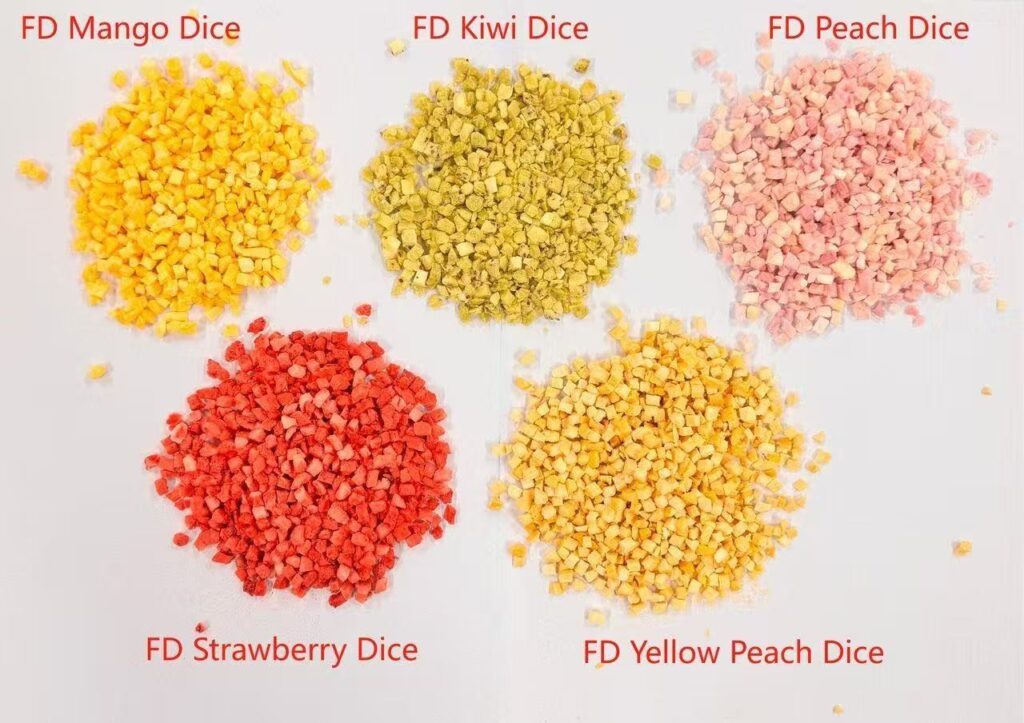
Depending on the product, these may include:
- Whole fruit
- Slices
- Dices
- Cubes
- Pieces
- Crumbles
- Granules
- Powder
Do not assume that two suppliers use the same definition for terms such as "dice," "pieces" or "crumbles." Ask for a specification sheet and confirm the actual size range.
For applications where appearance is important, request representative product photos or samples before approving the specification.
3. Specify the Required Size
Size can significantly affect product appearance, application suitability, yield and price.
Instead of writing:
Product: Freeze-dried strawberry dice
a more useful RFQ would state:
Product: Freeze-dried strawberry
Format: Dice
Required size: ___ mm
Application: Chocolate inclusion
Quantity: ___ kg
If you do not know the appropriate size, tell the supplier the application and ask which available sizes are normally suitable.
This is usually more effective than specifying an arbitrary size before evaluating samples.
4. Confirm Moisture and Water Activity Requirements
Freeze-dried fruit is highly sensitive to moisture. Once exposed to humid air, the product can absorb moisture and gradually lose the crisp texture expected from freeze-dried products.
For industrial purchasing, ask the supplier to provide the applicable product specification and confirm relevant parameters such as:
- Moisture
- Water activity, where applicable
- Storage conditions
- Shelf life
- Packaging requirements
Do not assume that one moisture specification applies to every fruit or product format. Specifications should be confirmed for the actual product being purchased.
If crisp texture or storage risk is a key concern, review the freeze-dried fruit moisture and packaging troubleshooting guide before confirming the bulk specification.
5. Define Expectations for Broken Pieces and Fines
This is an important purchasing detail that is sometimes overlooked.
Freeze-dried fruit is lightweight and brittle. Pieces can break during packing, carton handling, palletization, container loading, international transportation, unloading and final distribution.
The importance of breakage depends on the application. A manufacturer grinding the product into powder may care less about broken pieces than a retail brand selling visually intact whole strawberries.
Before placing a bulk order, buyers should discuss:
- Expected product appearance
- Acceptable broken pieces
- Acceptable fines or powder
- Sampling method
- Packing method
- Whether appearance is a critical acceptance criterion
If breakage is commercially important, define the acceptance standard before production rather than after the goods arrive.
6. Understand Natural Variation in Fruit
Freeze-dried fruit is made from agricultural raw material. Natural differences can occur between batches due to factors such as variety, growing season, ripeness, raw-material size, and natural sugar and acid levels.
As a result, color, size and flavor may not be perfectly identical from batch to batch.
Buyers who require tighter appearance or sensory standards should communicate those requirements during sample approval. The approved sample and written specification should be used together rather than relying only on product photographs.
7. Choose Packaging Based on the Product and Supply Chain
Moisture protection is particularly important for freeze-dried products. For bulk supply, the product is typically protected by an inner moisture-barrier package and an outer carton or other transport packaging appropriate to the product.
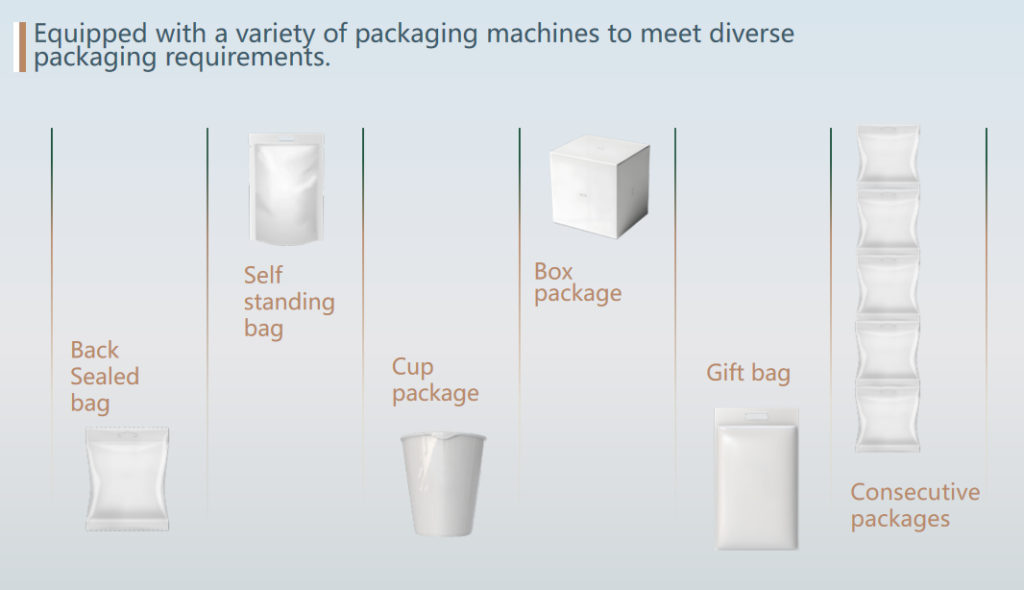
The exact packing configuration should be confirmed with the supplier. Important questions include:
For moisture-barrier and trial-order packaging questions, buyers can also review the freeze-dried food packaging guide.
- What is the net weight per inner bag?
- How many inner bags are packed per carton?
- What barrier material is used?
- How is the inner bag sealed?
- What are the carton dimensions?
- What is the gross weight per carton?
- Will the shipment be palletized?
- Are there special storage requirements?
- How should opened bags be handled?
For long-distance ocean shipments or destinations with high humidity, packaging and container conditions deserve particular attention. A low product price has little value if the product absorbs moisture or suffers excessive damage before reaching the buyer.
For private-label planning, review the bulk and private-label packaging route before comparing quotations.
8. Bulk Ingredient and Private Label Are Different RFQs
Buyers should clearly state whether they require bulk ingredient supply or finished retail/private-label products. These are different projects.
A bulk ingredient inquiry may focus primarily on product specification, quantity, bulk packing, quality documents and shipping terms.
A private-label project may additionally require retail pouch size, packaging material, artwork, label information, printing method, number of SKUs, carton configuration, barcode requirements and destination-market labeling requirements.
MOQ may also differ between bulk products, plain packaging with labels and custom-printed packaging. Therefore, buyers should not compare MOQ quotations without first confirming the packaging format. Buyers planning retail projects can review OEM and private-label freeze-dried snack projects.
9. Ask for the Right Documents
Document requirements depend on the product, factory scope, destination country and customer requirements. Before ordering, tell the supplier which documents you require.
Depending on the transaction, buyers may ask about documents such as:
- Product Specification / TDS
- Certificate of Analysis (COA)
- Ingredient statement
- Allergen information
- Microbiological test results
- Shelf-life information
- Storage conditions
- Packing information
- Certificate of Origin
- Applicable food-safety certificates
- Other documents required by the destination market
Do not assume that every certificate applies to every product produced by a factory. For regulated markets or specific customer programs, document requirements should be confirmed before the order is finalized. See also freeze-dried food quality documents.
10. Evaluate a Sample Before Approving Bulk Production
For a new product or new supplier, sample evaluation can prevent expensive disagreements later.

A buyer may evaluate:
- Appearance: Does the product meet the required color, shape and size?
- Texture: Is the product appropriately crisp and dry for the intended application?
- Flavor: Does it have the expected fruit characteristics?
- Size consistency: Are the pieces suitable for the intended manufacturing or retail use?
- Broken pieces: Is the level acceptable for the application?
- Packaging: Does the proposed packing provide appropriate protection?
- Application performance: How does the fruit perform in the buyer's actual product?
For industrial applications, testing the sample in the final application is particularly useful. A strawberry piece that looks attractive by itself may behave differently when mixed into chocolate, cereal, yogurt or another formulation. Buyers can also use the freeze-dried food sample evaluation checklist and review sample, packing and factory review points.
11. Do Not Compare Suppliers on Price Alone
Suppose Supplier A quotes a lower price per kilogram than Supplier B. That does not automatically mean Supplier A offers the lower purchasing cost.
Check whether both quotations refer to the same:
- Fruit
- Product format
- Size
- Specification
- Quality requirements
- Packing method
- Net weight
- Incoterm
- Documentation
- Sample standard
A quotation becomes meaningful only when suppliers are quoting against comparable requirements. For professional sourcing, the first objective should therefore be: define the product first, compare prices second.
Freeze-Dried Fruit RFQ Checklist
Before requesting a quotation, prepare as much of the following information as possible.
| RFQ Item | Buyer Information |
|---|---|
| Fruit | e.g. Strawberry |
| Application | e.g. Chocolate inclusion |
| Format | Whole / Slice / Dice / Powder / Other |
| Required size | ___ |
| Estimated quantity | ___ kg |
| Bulk or retail | ___ |
| Pack size | ___ |
| Number of SKUs | ___ |
| Destination country | ___ |
| Destination port | ___ |
| Required documents | ___ |
| Sample required | Yes / No |
| Target delivery date | ___ |
| Incoterm required | FOB / CIF / Other |
| Additional quality requirements | ___ |
You do not need to know every technical parameter before contacting a supplier. If some specifications are unclear, provide the application, destination market, required format and estimated quantity first. The supplier can then identify which additional details need to be confirmed before quotation.
A Practical RFQ Example
Instead of sending:
Please quote freeze-dried strawberries.
A buyer can send:
We are sourcing freeze-dried strawberry pieces for use as a chocolate inclusion.
Required format: diced/pieces
Preferred size: approximately ___ mm
Estimated quantity: ___ kg
Packaging: bulk
Destination: ___
Required documents: ___
Sample required: Yes
Please advise your available specifications, packing options, MOQ, lead time and quotation.
This gives the supplier enough information to prepare a much more relevant response.
From RFQ to Shipment
A typical sourcing process can be organized as:
RFQ -> Specification Confirmation -> Sample -> Sample Approval -> Packaging Confirmation -> Quotation / PI -> Production -> Pre-Shipment Documentation -> Shipment
For new products, specifications and sample approval should happen before large-volume production whenever possible. This creates a clear reference for both buyer and supplier and reduces the risk of disputes after delivery.
Freeze-Dried Fruit RFQ FAQ
What should I include in a freeze-dried fruit RFQ?
Include fruit type, application, format, size range, estimated quantity, packaging route, destination country, required documents, sample needs and target delivery schedule.
Why is product format important when buying freeze-dried fruit in bulk?
The same fruit may be supplied as whole fruit, slices, dices, pieces, granules or powder, and each format can affect application fit, breakage expectations, packing and cost.
Should I approve a sample before bulk production?
For new products or new suppliers, sample approval helps confirm appearance, texture, flavor, size consistency, broken pieces, packaging fit and application performance before production.
Are bulk ingredient and private-label RFQs the same?
No. Bulk ingredient RFQs usually focus on specification, quantity, bulk packing, documents and shipping terms. Private-label RFQs may also require retail pouch size, artwork, label information, SKU count, carton configuration and barcode requirements.
Should I compare suppliers by price per kilogram only?
No. Compare price only after confirming that each supplier is quoting the same fruit, format, size, specification, packing method, net weight, Incoterm, documentation and sample standard.
Need Help Defining Your Freeze-Dried Fruit Specification?
You do not need to prepare a perfect technical specification before sending an inquiry.
Start with four pieces of information:
- What fruit are you sourcing?
- How will the product be used?
- What format do you need?
- What is your estimated order quantity and destination market?
If you already have a product specification, send it with your RFQ. If you do not, send your application requirements and the available product specifications can be reviewed before quotation.